
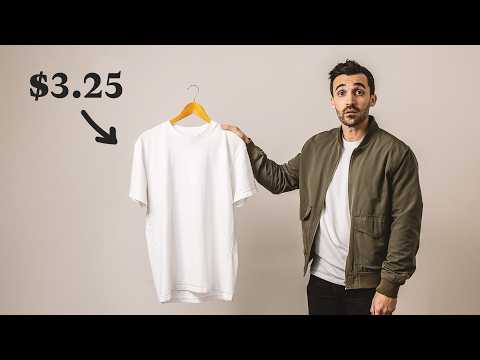
This is everything that's wrong with consumerism
15 clips from a 18:40 video · top score 94
Get clips like these, freeWhy it works
The closing punchline defending younger generations ('they didn't have a freaking mystery wheel pop up every time you go to buy socks') is hilarious, validating, and highly shareable.
Transcript
Looking at how most of the fashion industry is organized today, it's hard not to make the connection to social media. It isn't news that they've gotten monetizing our attention down to a science. Just recently, Meta agreed to a massive settlement that accused them of deliberately getting children addicted to their platforms. The company behind Facebook and Instagram have reached a settlement totaling nearly $18 billion to end the lawsuit centering on the harms of social media to children. And this feels a lot like what's happening with online shopping. Retailers are using algorithms to find viral trends. They're experimenting with increasingly aggressive ways to drive engagement. And with the billions of dollars that people spend every year on these apps, they've clearly figured out how to turn shopping into an addiction, as if it wasn't bad already. I don't think it's that our grandparents had better values than us. It's that they lived in a completely different system. One where wages were higher. One where they could invest in better clothes. And one they didn't have a freaking mystery wheel pop up every time you go to buy socks.
Why it works
Directly dismantling the popular internet excuse ('poor people need fast fashion') by pointing out that haul buyers are buying 5x more than needed is guaranteed to ignite fierce comment section debates.
Transcript
A lot of people try to they don't like to make people feel guilty about their purchases. I'd like to make them feel guilty. We should feel a little bit guilty, right? Like we should feel a little bit bad. We should know about what's going into making these clothes. And you know, we we we don't seem to to care. So it's not entirely up to you. Obviously, it's about brands, it's about regulation, and it's about you. But you can't just park that responsibility. You choose. You choose. Now, of course, there are mitigating circumstances. Of course, some of us have the privilege of being able to make more expensive choices or even have the time to dig into this. I get that. However, people overbuying crappy fast fashion are largely not doing it because they're worried about the cost of their kids' school uniforms or they need a t-shirt and this is the only one they can afford. They're actually buying five times more than they used to buy. And that's your choice. So I've stopped worrying about making people feel guilty. We get the system we choose. We get the brands that we support and buy from.
Why it works
Exposes the dark psychology and gamification of shopping apps that millions of viewers have experienced firsthand.
Transcript
I downloaded SHEIN's app for the first time to see exactly what the experience was like. I was quickly escorted into their discount mania. The non-stop casino prize wheels that land exactly where they're designed to to trigger the biggest rush of dopamine. Countdown timers blasting every time you try to close out the app. Free shipping, why not? I knew what I was in for. I had no plans to buy anything, and yet for some reason, my heart started to pound a little faster. They've removed so much friction and created so much urgency that most people never take a second to ask themselves, "Do I actually need this thing?"
Why it works
Directly mocks the ubiquitous 'Comment SHIRT and I'll DM you the link' meta on Instagram and TikTok, which viewers are exhausted by and love to complain about.
Transcript
Today I'm in the OG room and I'm doing a $200 Shein haul. Did I just spend $400 on Shein? I'm going to be replacing my entire wardrobe only using Shein. Now we can literally open our phone, scroll, shop every second of the day. Creators, influencers, every day they turn up wearing something new and it's this is my outfit, comment shirt and I'll send you the link. You only have to look at those kind of posts and see the hundreds and hundreds of comments, the engagement and there's no value behind it. It's just promoting constant mindless consumerism that has created a whole new culture of of buying now but not necessarily buying better.
Why it works
Tracing the physical journey of cotton (grown, picked, ginned, spun, woven, dyed, cut) makes it viscerally obvious why a $3 shirt is impossible without exploitation.
Transcript
You can go on Shein and get a plain white t-shirt for $7 USD. Can I say actually except today it's 90% off if you buy now. Yes, that's right. Yeah, yeah, $7 is the the the listed price, but you could probably get it for $3. What does it take to make clothes that cheap? Such a good question. In sort of sustainable fashion activism circles, we love to say somebody always pays the price for too cheap. The way to think about it is to consider the physicality of that t-shirt. What's it made of? If it was cotton, a farmer has to grow that fiber. Then that fiber has to be picked, ginned, processed, spun, woven, dyed before it becomes fabric, at which point you can then cut out that t-shirt. Now those processes in themselves should be adding up to more if they're done responsibly and without cutting masses of corners. It's not hard to imagine how much the worker, the garment worker, is squeezed in this equation. Retailer Shein is in hot water once again. Shein has faced accusations of worker abuse. has recently come under fire. There have been allegations of forced labor. They themselves have found incidents of child labor. And there are accusations that their staff are overworked and underpaid. Workers are working something like 75-hour working weeks according to some investigations, paid piece rates. There's obviously no benefits, no pensions, no holiday pay. It's always the worker at that end of the supply chain that pays the greatest price. I always try and think about cheap, but at what cost and at whose expense.
Why it works
Opens with a jaw-dropping stat (10,000 styles a day) and reveals the hidden tech-company mechanics behind a clothing brand.
Transcript
Now, with ultra-fast fashion, you have these companies and brands who are putting out 10,000 styles every single day. Like, how is that scale even possible? It's hard to wrap my head around. How does that even work at that scale? I think what SHEIN did was recognize that fashion can be a tech proposition. And say, "Well, we don't need to pay retail staff. We don't need retail stores. We don't need designers." And that cuts costs exponentially. Then there is the supply chain, which is concentrated just at Shanghai, which is about lots of small producers, where you can test these styles, these huge numbers of styles that you're putting up on the website every day, and see if they fly.
Why it works
Contains the highly quotable and shocking hyperbole 'Clothes are now cheaper than toilet paper' paired with the stat that people buy 5x more than they used to.
Transcript
The most problematic thing is the social programming that's going on for the last generation. Every day they turn up wearing something new. You only have to look at those kind of posts and see the hundreds and hundreds of comments, the engagement promoting constant mindless consumerism. Clothes are now cheaper than toilet paper. There are options in every style and color you can imagine. People are buying five times what they used to, and even then it's not enough to fill people's appetite. They've got a totally new system of fueling desire and overproducing what we're supposed to wear.
Why it works
Sharp, quotable takedown ('Another word for that is stealing... chucking it in the AI blender') that resonates strongly with artists, designers, and anti-AI sentiment.
Transcript
I'm guessing that with the sheer volume, they are algorithmically based, similar to TikTok or Instagram, where it's like, yeah, all 10,000 maybe aren't being consumed, but it's the ones that are rising to the top are being purchased by most people. Absolutely. You know what? It's inhuman. So, it's designed by algorithm, if you can call it design. It's scraping the internet for inspiration. Another word for that is stealing. And then chucking it in the AI blender, that's not a technical term, and spewing out stuff that has no soul, no craft, and I would say no human connection.
Why it works
Combines a fascinating economic anomaly (clothing defying 30 years of inflation) with a relatable callout of what the average guy expects to pay for a shirt.
Transcript
If you look at historical data of apparel prices, you'll see something really interesting. From 1994 to 2024, they basically didn't budge even as inflation doubled the price of almost everything else. To give you an idea of how low the prices have gotten with ultra-fast fashion, the average item at Zara is $34, at H&M it's $26, and at Shein it's $14. As I had these conversations with retailers, it was this shift in expectation that's clearly become one of the biggest challenges they've had to face. The most problematic thing is the social programming that's going on for the last generation. The average person, let's say the average guy, has been programmed to spend $10 on a t-shirt, $50 on a pair of pants, $100 on a jacket, and he's been programmed to then turn them over every season or every every year or um however long. He's been programmed to accept that that those garments that he's buying for peanuts, um he's going to throw them out pretty soon, and he's going to buy some more.
Why it works
Reframing a common word ('consumer') in the first 5 seconds forces the viewer to rethink their relationship with material goods.
Transcript
I've always resisted this term consumer. You consume food. You eat it, you need it to survive. But we're not doing that with clothes. Like the idea of consumption of something that is a physical, non-biodegradable product that doesn't give us any sustenance is really weird. It's attached to this idea of clothes as disposable, which is a relatively new idea. For most of human history, clothes were really precious. They were hard to acquire. You either made them yourself or you saved up later on from the 19th century and you bought them in small numbers, unless you were royalty. But now we've got to this mad sort of flipping of that where everyone thinks that they deserve to dress like royalty, and that status is about having more and more overly sumptuous amounts of stuff.
Why it works
Business breakdowns of massive, controversial companies like Shein and Temu always draw huge engagement and debate in the comments.
Transcript
A small Chinese retailer named Shein led the charge with ultra fast fashion in 2020, and quickly reshaped the entire industry. They came in hot with a new model that allowed them to produce clothes faster and cheaper, and at an even larger scale than Zara or H&M. And as a result, they started to eat up the market share of the fashion industry. Shein came out of nowhere, growing its net sales from $1.4 billion in 2018 to $41 billion in 2025. Shein. Shine. I say She-in. It's She-in. Shein is known for $2 t-shirts and $7 pants. As with any formula that works in business, others quickly copied it. Amazon shopping, Temu, and others followed along with their own versions of ultra fast fashion. The speed and scale that clothing was now being produced at quickly reached numbers that are hard to imagine.
Why it works
Calls out the viewer's own blind spot ('I just bought a pair of jeans') before dropping the shocking 56-items-a-year stat and genuine host reaction ('What?!').
Transcript
for most of us, think about what you might buy in a few months, right? You might say, "Oh, I just bought a pair of jeans." But if you really think about it, you very likely bought exercise gear, a four pack of t-shirts, a lot of new socks, kids clothes, some going out outfits, some new shoes, some sneakers. Actually, all adds up to crazy numbers. We're filming this in Australia and Australians consume on average, I always remember this particular number, 56 new items of clothing every year. What? Like that's more than one a week. That's buying a new thing more than once a week. So we're buying more than we need and we're using them for much less time than our parents and our grandparents used to.
Why it works
Clearly breaks down the timeline from 2 seasons a year to monthly drops to daily uploads, giving viewers an 'aha' moment about how shopping habits were engineered.
Transcript
store physically, that you might get excited to go and see every few weeks, you've got new styles online every single day. These companies are chucking out new choices, new styles, at rates that are dizzying. They've got a totally new system of fueling desire and overproducing what we're supposed to wear. A small Chinese retailer named Shein led the charge with ultra fast fashion in 2020, and quickly reshaped the entire industry. They came in hot with a new model that allowed them to produce clothes faster and cheaper, and at an even larger scale than Zara or H&M. And as a result, they started to eat up the market share of the fashion industry. Shein came out of nowhere, growing its net sales from $1.4 billion in 2018 to $41 billion in 2025. Shein. Shine. I say She-in. It's She-in. Shein is known for $2 t-shirts and $7 pants. As with any formula that works in business, others quickly copied it. Amazon shopping, Temu, and others followed along with their own versions of ultra fast fashion. The speed and scale that clothing was now being produced at quickly reached numbers
Why it works
A veteran of 30 years in the fashion industry calling the system 'revolting' and advocating for walking away from consumerism provides a powerful, uplifting conclusion.
Transcript
if you were to give you people watching this video one piece of advice, one thing that they could do after watching this video, what would you say? I think buying much less is the best solution. And and maybe this is just what I've I've come to in my own life. I don't I don't know what everyone else should do. But, I've just stopped being interested in fueling a system I find revolting. And it feels quite powerful to reject it and just not get it. You know, I'd rather and this sounds a bit worthy and I'm sure get some grief for it. But, I genuinely, having spent 30 years in the fashion industry, feel much more delighted by going for a walk in nature and looking at the birds than I do by buying a bunch of feathers and dressing like
Why it works
Bespoke menswear and price reveals ($3,800 suit) perform reliably well on Reels and Shorts, sparking debates on whether custom tailoring is worth the price.
Transcript
It is slow fashion in a way like it will take us several weeks to put a suit together like this gentleman's suit like I just put the sleeves on today and like just putting that shoulder roll in is just to get that curve on the top of the shoulder. We sell it as this romantic sort of slow handcrafted but you need to race against the clock and me and Marco are constantly racing against the clock to get things done. Uh you you can't move your wedding date back so we will work through the night to get that that finished. How much is this jacket going to cost? Uh so this jacket cost 3,800. Uh it's going for a wedding up in Byron Bay. So we've seen this gentleman about four times now and he That's the jacket and pants? Jacket and pants. Uh and this is an perfect example of we had less than a month.
