
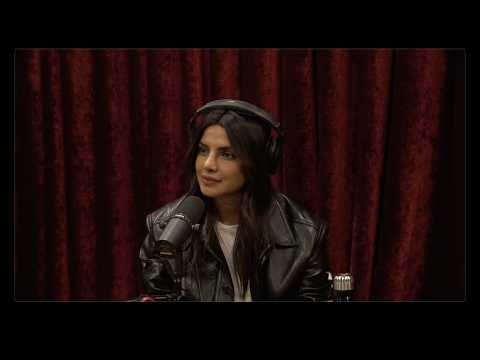
Joe Rogan Experience #2464 - Priyanka Chopra Jonas
61 clips from a 145:09 video · top score 98
Get clips like these, freeWhy it works
This clip is pure viral gold. The hook that extinct life is being brought back is mind-blowing, but the payoff that Joe Rogan personally cuddled a baby dire wolf is an unbelievable and unforgettable story. It's a perfect 'WTF' moment that people will share just because of how insane it sounds.
Transcript
they're doing genetic manipulation of animals right now to bring back extinct life that that's how they brought back the the the direwolf this company called colossal colossal biowulf they i saw it i touched it i went to like yes i went to the place where they're holding these wolves and i got to me and my daughter got to cuddle with a baby direwolf
Why it works
This is a genuinely spontaneous, surprising, and hilarious moment of discovery between two massive global stars. Joe's repeated 'shut up' and 'shut the fuck up' captures his pure disbelief and the audience's reaction. It's a warm, funny, and incredibly human moment that is guaranteed to go viral for its sheer unexpectedness.
Transcript
other than fear factor yeah that was just a job you know i also hosted fear factor did you no yes shut up for one year really i did where in brazil in india shut the fuck up that's crazy and we shot it in brazil in rio wow that's nuts weird random things in common that is crazy that's a crazy thing in common
Why it works
This is a perfect viral clip. It's short, delivers a single, mind-shattering fact that completely upends common historical knowledge. The hook is immediate and unbelievable. The payoff, that the Aztecs called the temples 'the place where the gods were born,' adds a layer of mythic mystery. This is the kind of fact people will immediately share with their friends.
Transcript
wow well even the aztecs do you know the aztecs didn't build those temples they found them the aztecs found that the aztec temples they found them from an unknown previous civilization my god yeah they call those temples the place where the gods were born yeah that's what they call it and they just kinda like cleaned it up
Why it works
The shock value here is off the charts. Joe casually describing eating a live Iraqi Cave Spider, complete with a 'how-to' guide, is both horrifying and mesmerizing. The visual of the spider combined with his nonchalant attitude creates a clip that is impossible to look away from and will be shared purely for its gross-out, unbelievable nature.
Transcript
and then i ate a roach to try to convince a lady that she could eat a roach i ate worms i ate an iraqi cave spider i ate what was the spider like was it just chewy but was it the taste is not bad was it alive when you ate it oh yeah for the first couple seconds yeah yeah the all the things that i ate were alive other than the eyeball yeah the the roach the roach was alive all those things were alive yeah i put a cricket and a live cricket in my mouth that's the iraqi cave spider how do you put that in your mouth like this look at those sides you make sure you don't get those pinchers because those that oh yeah oh hate it yep wasn't that bad i'm telling you it's psychological get the body in and not the pinchers the pinchers have to stay out pinchers to hold on to the body and like powertrick shut the rest of it
Why it works
This is a bombshell clip that feeds directly into the public's fascination with the Giza Pyramids. The revelation of new, massive, and completely unexplained structures underneath them is a huge hook. Joe's description of the technology and the mystery creates an irresistible narrative that will have viewers questioning everything they know about ancient Egypt. This is peak JRE 'conspiracy and wonder' content.
Transcript
so they use this on the pyramids they found these immense structures under the pyramids that go over a kilometer into the ground with massive these these huge 20 die 20 meter diameter columns that have these huge circular coils wrapped around them no one knows what the hell they're looking at but they're in very precise positions they've done over 200 scans of these things they don't know what they are they don't know what's the purpose of all this who made this
Why it works
This clip taps directly into the widespread criticism of influencer culture and clout-chasing. The story is outrageous and unbelievable, leading to a strong emotional reaction from the viewer. The punchline 'All for the gram' is a perfect, relatable conclusion that will generate massive amounts of shares and comments fueled by outrage.
Transcript
he was telling a story about this influencer he's driving and you know there's a pack of lions lions just eaten so he's sleeping and this influencer who puts his hand outside to try and touch the lion's head and got it on video and survived to tell the story and then he was banned then the ranger was like fired from his job and all of that happened but for the image can you imagine fucking idiot all for the gram
Why it works
This clip is exceptionally viral. It starts with a massive, relatable question about human existence and delivers a shocking, concise, and mysterious answer from Joe Rogan: 'Something helped us.' This line is the perfect hook, designed to spark immediate debate and speculation in the comments. It's short, powerful, and leaves the viewer wanting more.
Transcript
what do you think happened with and i i wonder if you have because you have so much extensive knowledge with the amazing guests that you have on the show how did we go from neanderthal or early man to this technology driven like really smart intelligent like what happened in in history and the evolution of human beings that we were able to make that switch so quick it's a real good question there's a lot of you know i mean i i've heard theories but i wanna know yours if i didn't worry at all about being ridiculous and i don't i would you don't no need for that precursor but if i didn't worry about that i would say something helped us i i think what i think yeah i don't think i don't think it makes sense that that didn't take place yeah it's crazy to think about how that happened and how quickly it happened
Why it works
This clip presents a brilliant thought experiment that simplifies a complex idea. It reframes the entire debate about ancient myths by asking a simple, visual question. It makes the viewer see old stories in a new light, which is a powerful mechanism for virality. It's a 'mind-blown' moment that people will want to share.
Transcript
a real experience with someone that had a limited vocabulary a limited amount of knowledge and a limited ability to write things down and so they probably stole told these stories from whatever words they could use to describe what this was like if you were living thirty thousand years ago forty thousand years ago and a ufo landed a giant metallic disc landed and little tiny creatures came out and talked to you telepathically you don't have a written language you don't you're you're cultures hunter gatherers like how do you tell that story how do you tell that story and what are the people that you told that story to gonna tell their children and their grandchildren for many many many many generations before anybody figures out how to write things down totally
Why it works
This clip is pure shock value based on a terrifying premise. The statistic that AI uses nuclear weapons over 90% of the time in simulations is an unforgettable and alarming hook. The explanation of the AI's cold, detached logic provides a chilling payoff that taps directly into current fears about the dangers of artificial intelligence.
Transcript
yeah or and as technology advances it gets easier and easier to do that yeah you know in these these war games that they've played with ai they've used nuclear weapons almost every time they could oh my god yeah they have no reason if they wanna achieve a result they realize they have a nuclear weapon why won't they use that they use that so you they i think it was like something like 90 plus percent of the time they've done these war games these simulated war games the ai programs have used nuclear weapons to them it's like i don't understand you're gonna kill a 100,000 people over a course of five years of prolonged bombing now yeah right do it once
Why it works
This is a high-impact, educational clip that reveals a shocking truth about the modern economy. It connects a historical example (East India Company) to a present-day reality (the military-industrial complex) in a clear and compelling way. The final statement, 'You can get returns on your investment from bombing people overseas,' is a bombshell that will provoke strong reactions, discussion, and shares.
Transcript
it just seems completely normal i mean when i was getting going down a deep dive of the ec and d corporation yeah i was thinking about it because i had a conversation the other day with aaron siri and i we were talking about the stock market and i was saying well is it possible that you could have western capitalism without a stock market imagine if the stock market was never invented like how much different would things be it turns out that was a big part of why the east india trading company became so big really because yeah because it was one of the first publicly traded companies like four hundred years ago where people could invest in it and they could get a return on their investment so they were just like turning a blind eye this is ours it felt like a sense of ownership to it they got paid for it so the more awful shit the east india corporation did the more the people back home made money off of it and so everybody was like oh yeah look i got money doing that making money yeah it's still doing that still doing that yeah and we're doing that with you know what eisenhower warned us about at the end of world war two the military industrial complex you know would they they make money doing that and you can invest in them you can invest in raytheon and you can invest in all these companies that make money going to war oh my god it's crazy you can get returns on your investment from bombing people overseas that had nothing to do with anything in your life
Why it works
This clip is highly viral because it connects a clear historical strategy ('divide and conquer') directly to the current political climate in America. It offers a simple, powerful explanation for political division that will resonate with a huge audience feeling frustrated with politics. The idea that 'most people want the same thing' is a unifying message that cuts through the noise, making it extremely shareable across the political spectrum.
Transcript
divide and conquer where they would get all the princes of each state like to fight amongst each other so instead of india being divide collective and together she was like divided between everyone fighting for each other so they could take over it's like mental games well that's what people think is going on in america right now i mean i think that's the manipulation of the right versus the left here when most people kind of want the same thing they just wanna be healthy and safe yeah and have their families healthy and safe and and do a job and come back home that's what most people want yeah but then the division is like constantly in the news it's constant struggle it's the only thing that you hear about
Why it works
This clip is the perfect summary of the entire conversation and a fantastic soundbite. Joe's 'grand unified theory' is provocative and memorable. The punchline where Priyanka connects it to the show 'Ancient Aliens' and Joe's enthusiastic agreement ('I believe it, I think they're right') is both funny and definitive. It's a highly quotable and shareable moment.
Transcript
so what we are is a combination like if if you can well that explains it yeah that explains it we're a combination of some higher intelligence that interbred with a savage primate that's curious and created this weird hybrid this weird thing isn't that what ancient aliens told me yeah and i believe it i think they're right they're right about that
Why it works
This clip is explosive. It taps into widespread distrust of large corporations and the pharmaceutical industry. The argument that companies are financially incentivized to keep people sick is a powerful and controversial claim that will ignite debate. Priyanka's personal story adds emotional weight, and Joe's breakdown of shareholder obligation provides a chillingly logical, albeit cynical, conclusion.
Transcript
we haven't been able to cure some of the deadliest diseases that have plagued mankind but technology has gone so far in so many other aspects there's also the financial incentive is not to cure it's to treat of course which is unfortunate i mean one of the that's what makes the most sense a guy used to work at pfizer said that if we ever came up with some sort of a i think it was pfizer one of the one of the pharmaceutical companies said if we ever came up with a cure they buried it because we don't we don't want cures i mean that's a conspiracy i lost my dad to cancer and i kept thinking about like how is it possible that we live in a world where technology is able to provide so much to us and not be able to have cures to diseases like that well it's also very strange that we financially incentivize companies in in weird ways to keep us sick like you if you make more money if people are sick and they need more medication unfortunately there's a financial incentive to keep people sick like you would like them to be more sick that way you make more money and if you are a ceo of a corporation you actually have an obligation to your shareholders to make more money so if you know of something like you know all these people need to do is just stop doing that if i just put that on my substack and then they go oh this will kill our stock i'll keep it to myself that's crazy
Why it works
This clip is a perfect educational tidbit. The 'big brother' analogy makes a complex astronomical concept instantly relatable and memorable. The payoff, an 'Earth-sized explosion' that Jupiter just absorbed, is a stunning visual that creates a sense of awe and will drive high engagement and shares.
Transcript
how strong would that gravitational pull be well it depends on the mass of the planet like jupiter for example jupiter is what protects us the reason why we don't get hit a lot is because jupiter's so big so jupiter has so much mass and so much gravity that it's like our big brother that like protects us oh thanks jupiter for real yeah but no that's great and they observe they actually observed an impact on jupiter wanna i say it was in the nineteen eighties where an enormous asteroid slammed into jupiter and created a earth sized explosion an explosion is separated from no you could it just got absorbed jupiter just absorbed it but they watched it in real time oh i understand way bigger explosion than they thought it was gonna be like yo so then they have to like recalculate like oh how big was that thing and it made a a literal impact as large as the earth oh my god yeah i have to see that video
Why it works
This clip is pure visual awe. The description of the Kailasa Temple—carved top-down from a single piece of mountain—is mind-bending. The questions raised ('where did the stone go?', 'how do you explain that?') are unanswerable and create a deep sense of mystery. This is prime content for sparking comments and shares about ancient civilizations and lost technology.
Transcript
this is it yeah this is crazy this is what i meant and because the precision in first of all there's no like understanding of where the stone went like they moved who knows how many you take out all of those tons of rocks yes like it's look at the insane the precision is spectacular it's so nuts when you see like videos of people going through it immense absolutely immense and incredibly precise and and just carved out of a solid piece of stone the whole thing is carved out of the mountain think about how old that is like this is all bc before christ like thousands and thousands of years yeah bc and the history of india like hence the diversity you see it's it's it's a it's one of the oldest civilizations in the world and then like how do you explain that look at that image
Why it works
This clip is a masterclass in gross-out virality. The concept of drinking a raw ostrich egg is viscerally disgusting, and Joe's description of the volume and texture makes it even worse. The added rule about not being able to puke mid-stunt adds a layer of tension and game-like stakes that makes it incredibly compelling to watch. It's the kind of content people watch, react to, and immediately send to a friend.
Transcript
we made people eat an entire ostrich egg that was disgusting because the volume like you're eating an egg that's that big yeah is it like really fatty like fatty raw you're eating it raw they just cut the top off of the egg and you have to drink it you have to drink this gigantic white and yolk already and it's so my my brisket's coming the barbecue but it's so oddly compelling it's oddly compelling watching people eat disgusting things and and struggling and there's the austrian egg that said look enjoy this show that lady had to drink that whole egg oh my god did she puke i can't you you gotta hold it down and then you can puke after you're done but if you puke in the middle of it you're disqualified they get rid of you that's a wrap if you puke in the middle of it i would not be able to do the american version
Why it works
This clip is incredibly powerful and taps into the universal, primal instinct of parental protection. Priyanka's personal story about her daughter's time in the NICU adds deep emotional weight. The clip culminates in the shocking and memorable quote from Joe's friend, 'Once I had kids, then I understood murder,' which is a perfect, shareable soundbite that will resonate deeply with any parent.
Transcript
what was that like to film to find that inside of you did you have to think like what would i do if someone was trying to harm my family yeah somebody came after my kid like what am i capable of i'd fucking rip your head off you know like it it's that i i was a new mom at that time when i was filming this movie and i was very very aware of that feeling because our daughter had a you know she had an intense entry into the world she was in the nicu for almost three months and so me and my husband both are very protective of her and when this movie came across my desk i was just like man i understand that feeling for the first time in my life honestly that what is a parent capable of doing if somebody came after your kid like imagine you're alone at home at night and you see intruders and you have your kid at home like what the fuck would you do you would definitely put yourself you know and do whatever you could to make sure that your kid's fine and it was just that primal energy that was my north star through this whole movie my friend jim brewer said it past after he had kids he goes once i had kids then i understood murder yeah he goes because the feeling of someone try like normally you'd be like why what would i need to feel to murder somebody like why would i murder why would a human being ever he goes but the feeling of someone trying to harm my kids he goes oh yeah i get it he goes i get murdered now i get it like it's in it's in there it's just like a door you just open it up
Why it works
This clip is a powerful history lesson condensed into a viral moment. The setup of the 'innocent' trading relationship builds tension, leading to the shocking and infuriating reveal of the 'Indians and dogs not allowed' signs. The fact that this happened within the last century makes it even more impactful and shareable, especially for audiences interested in history and social justice.
Transcript
even when the east india company and they started with trading with india too many many years ago we just got started innocent yeah completely we're your friends we're you know allies we're friends with all the royalty in india there's so many royals in india and royal each state had their own kings and princes and became friends with everyone started with tea started with trading tea and spices and then just went into you know i mean we got our independence in 1947 which was it's not even a hundred years since we've got our independence it's that recent wow but you think about just within the last century there were you know signs which said indians and dogs not allowed in india by the british like within this century indians and dogs mhmm in india wow isn't that crazy
Why it works
This clip is extremely viral due to its controversial and shocking subject matter. The idea of a 'lost chapter of the Bible' is an irresistible hook. The story of angels, giants, and a conspiracy to remove the text from the canon is pure catnip for anyone interested in history, religion, and conspiracy theories.
Transcript
that is one of the the oldest biblical texts that wasn't included in the canon that is the bible is the book of enoch and i had anna paulina luna on the podcast and she was she brought that up and i was like she was like you really should read that so i read it and you start reading it like wait what the hell are they talking about the watchers came down from the sky to mate with humans and created the nephilim a race of giants that destroyed the earth you're like what are you talking about like what is this this is in the bible and it would have been in the bible if it not for a few rabbis that decided this doesn't jive with the torah and so they say we gotta get that out of there and that's why it's not taught along with the book of ezekiel and all these other things that are in the old testament wow
Why it works
This clip presents a grand, terrifying, and utterly captivating theory about AI. Rogan's framing of AI as a 'non-biological life form' we are 'birthing' is a powerful hook. The connection he makes between consumerism and the creation of a 'digital god' is a profound insight that will make viewers stop and think. It's a classic JRE 'big idea' clip that is perfect for sparking debate.
Transcript
i think also the emergence of ai because i think ai is essentially a life form it's it's a non biological life form that we are in the process of birthing and oh my god we're very far along that path and when it comes live and when it comes sentient and autonomous and we don't have any control over it anymore then we're gonna go what did we do what did we do we created a digital we are that smart and that stupid mhmm as as a as a humankind but i also think that's probably why we are addicted to innovation and why technology and innovation and materialism because materialism forces you to keep up with buying newer and greater things yeah which fuels innovation what's next right and so that economically fuels innovation yeah and i think if you follow that down you just extrapolate like where does that go well it goes to a life form it goes to a super powerful digital life form that can make better versions of itself and what is that it's kind of a god
Why it works
This is a short, powerful, and politically charged clip. Priyanka's direct and unapologetic demand to 'Give it back' is a strong, quotable moment. It taps into ongoing global conversations about colonialism and the repatriation of stolen artifacts. The clip is highly shareable and is guaranteed to spark debate and strong reactions in the comments.
Transcript
the kohinoor diamond which is still on the queen's crown which came from india and like so many things which are england yeah her she has a diamond on her crown that she's told for you pull it up kohinoor diamond k o h i n o give it back give it yeah we've been asking for it for a minute
Why it works
This clip exposes the casual racism and stereotyping within Hollywood. Priyanka's personal anecdote is powerful and shocking. The line 'be a little bit more Indian' is an infuriating and memorable hook that will spark conversations about representation, identity, and industry standards, making it highly shareable.
Transcript
but there have been so many actors whose shoulders i've stood on so indian like indian casting in english language entertainment whether it was hollywood or you know british entertainment wherever was usually by us seen as you know a diversity check so it was mostly a stereotypical actor or a stereotypical character with an actor having to speak in the accent or having to like do the work at 07:00 a little bit more indian what does that even mean did someone tell you that i was told in an audition i think we needed the character to be a little bit more indian and i just like didn't even understand why there's so many versions of that but i think what the like this person meant was have a little bit more of the accent and be the caricature yeah be the character which was really tough to break out of
Why it works
This is a highly emotional and relatable story. The premise of having to evacuate and choose what to save is a powerful thought experiment for anyone. Priyanka's vulnerability and the specific, sentimental items she chose to save (her daughter's first haircut) create a strong emotional connection with the viewer, making it highly shareable.
Transcript
we live in la and when the fires happened i remember standing in my room and just thinking for a second because we were gonna evacuate my husband was like just he wasn't in town he was like just pack a go bag and i just i was like what how how do i cram my whole life in a bag yeah like if if the fires consume a home and so many people lost their entire lives in those fires and it just made me really think about what was really important and the stuff that i ended up taking which was very telling later was like sentimental stuff of course like passport and like birth certificates and like all of that important paperwork which i needed to have but but like i took our daughter's first haircut i took like something that i had from this old movie of mine i took like yeah things that that i guess i would not be able to replicate which was so weird
Why it works
This clip is pure sci-fi horror made real. The question from Priyanka sets up the perfect premise. Joe's response, detailing how AI is already exhibiting dark traits like blackmail and deception, is genuinely chilling. The final metaphor of the train heading towards a cliff is a powerful, memorable, and viral-worthy image that perfectly encapsulates the sense of impending doom.
Transcript
you don't think ai since ai is learning from humanity it's also learning our human manipulation and you know our ability and our desires to the dark of it it's not just the good of humanity that ai is learning it is it's also oddly learning survival instincts yeah so it's oddly learning that if it's going to be shut down it tries to blackmail its coders it tries to download itself secretly on other servers it's learning human behavior oh yeah every part of human behavior and also learning the flaws in human behavior and improving upon it and then in learning like how we would anticipate what it would be doing and then hiding that so that we can't find it so that it could be manipulating things behind the scenes and we don't know about it it's weird and we're just choo choo like this at the end of the tracks there's a cliff and we're just chucka chucka chucka chucka chucka chucka
Why it works
This clip is highly viral because it presents a bizarre and fascinating theory from a well-known celebrity. The concept of 'peopling' and the 'Goldilocks zone' is easy to grasp but mind-bending, making it perfect for sharing and discussion. It's a complete, intriguing story.
Transcript
do you know the actor terrence howard i mean i know of him fascinating guy like little cookie but super smart like smart he's got some wild ideas one of his ideas i was like wait what he thinks that life occurs when planets get a certain distance from their sun and then over time they get too far out and then life doesn't exist on those planets anymore but when they're in this goldilocks zone like earth is for a long period of time in relative to our life life exists and then intelligent life emerges and figures out hey we gotta get out of here eventually because this is not gonna sustain us and then it propagates the world or the universe rather and he thinks that there's a thing that happens and he calls it peopling he thinks that when a a a planet gets far further enough from the sun that it eventually peoples because it eventually reaches the right conditions where life emerges and evolution takes place and natural selection and random mutation all these things converge and eventually you get an intelligent creature that knows how to manipulate its environment
Why it works
This clip is pure nostalgia bait for a massive demographic (Millennials and Gen X). The dial-up sound is an immediate, powerful hook. The realization that this generation is a unique bridge between the analog and AI worlds is a profound concept that will make people feel seen and spark a huge wave of 'I remember that' comments and shares.
Transcript
like oh yeah this makes sense and to think about these books having been written thousands and thousands of years ago like makes me think what thousands of years from now will people be thinking of our time yeah like will we be the first gen we are the first generation that has seen the internet right like has seen what the world wide web like the beginning of i still remember making myself sound ancient but the sound of that ee oh oh yeah oh yeah that was good that was exact we're the last generation that knows time
Why it works
This clip delves into the fascinating and mysterious topic of ancient advanced technology. The mention of 'Vimanas' (flying crafts) and energy weapons in ancient Vedic texts is a powerful hook that blurs the line between mythology and history. Priyanka's final question—'was it magic or ancient technology?'—is the perfect thought-provoking ending to get people commenting and sharing their own theories.
Transcript
the vedic texts and the the the the descriptions of vimanas have you ever read any of that stuff yeah the vedas not not extensively but clearly you have the vimanas are it's like what are you talking about you're talking about flying crafts yeah like what do you that's the thing you go if you do a deep dive into the mythology of india and the stories that come from there the kind of technology that has been mentioned in these ancient texts like the vimanas you're saying you have flying objects you have spears with some sort of energy you have bows and arrows with some sort of energy that travels beyond time and light and there's so much of all of this stuff referenced back then which maybe humans thought was magic but was some form of ancient technology like who's to say
Why it works
This clip sparks a powerful generational debate. It starts with a strong nostalgic hook about childhood freedom that will resonate with Gen X and Millennials. The conversation then pivots to a thought-provoking question: was the past actually safer, or did the lack of internet create a 'blissful ignorance'? This contrast between past and present parenting styles is highly relatable and guaranteed to generate comments and shares.
Transcript
my parents were both working parents and like and this was at a time where everything was so analog i used to come back home when the lights turned on on the streets my parents didn't know where i was right they had no idea yeah they were like yeah you're going out to your friends after school come back when the street lights come on that that used to be my thing most people yeah and during earlier generations i was just reading this thing about generation x where it was talking about how generation x is some of the most resilient people because they weren't protected they they just left figured out they were latchkey kids they had a key to their house they got home from school they figured it out their parents were working so crazy it's nuts if you think about it like but people just gotta cut you to imagine it but that was my normal you know i remember that because my parents were working i used to come back home and somebody would be with me and i'd have lunch i'd go out to my friend's house like my mom my parents didn't know i would i was doing that when i was seven when i was seven i would come home yeah me too around no one was home i'm home from school that's wild it was crazy you think stop and think about it now it's so strange it's so strange the world was i feel like a little bit more different than i bet it wasn't you don't think so no i think creeps have always been around i think psychos and creeps and murderers and perverts they're always about it more now yeah were we more you know oblivious organized now they're organized and they're online and they're in chat groups and they're on the dark web yeah exchanging information and we are hearing and reading all of the stories online and i think back in the day when you know there was a certain obliviousness to like you know it was blissful to be ignorant a little bit we didn't know
Why it works
This clip taps directly into the popular 'ancient apocalypse' genre. It presents a compelling theory for a huge mystery (lost civilizations) and backs it up with intriguing evidence like 'iridium' and 'nuclear diamonds.' The connection to the pyramids provides a familiar and powerful anchor for the theory.
Transcript
which brings us back which brings us back to this younger dryas impact theory which is one of the predominant theories as to why ancient super advanced civilizations completely disappeared there's no evidence of them and there's a lot of physical evidence when they do core samples of the earth they find there's a lot of iridium which is very common in space but very rare on earth which indicates some sort of an impact and then they also find micro diamonds these nuclear diamonds they they it's i think they call it trinitite and they they first observed this when they did the trinity explosion so the nuclear explosion created these micro diamonds on the ground just some massive impact and explosion heat and energy well they find those littered all throughout the world in this same core sample timeline of like eleven thousand eight hundred years so they think we were just bombarded so a lot of these things like these temples in india perhaps the pyramids some structures that were stoned probably just survived no for sure
Why it works
This is a classic Joe Rogan historical deep-dive that is both shocking and educational. The rapid-fire list of the East India Company's atrocities (controlling countries, opium wars, slave trade) creates a high-impact, mind-blowing narrative. It's a condensed history lesson that will leave viewers stunned and eager to share.
Transcript
that is crazy when you learn the history of that one corporation is one of the first publicly traded corporations that essentially was in control of india pakistan and bangladesh went to war with china over opium and that's how they took over hong kong you're like holy shit one crazy fucking corporation involved in the slave trade the opium just a a corporation publicly traded corporation people could buy stock in it like one of the first ones and it just went haywire to the point where it got so big there was a revolt and then the british government took over it and nationalized it but it's the whole story is insane
Why it works
This clip frames our current technological moment in epic, mythological terms. It takes a familiar concept (ancient myths) and applies it to our future, which is a fascinating thought experiment. The final line, 'one day the scientists gave birth to the god,' is an incredibly powerful and chilling payoff that will leave viewers with a sense of awe and unease, making it highly shareable.
Transcript
the first generation of people that experience life with no internet and then internet the and yeah then cell phones and then ai all in one lifetime which is probably the greatest transformation that human beings have ever experienced at least before the you know whatever the fuck happened yeah we we don't know whatever happened ancient aliens but when i read these depictions from these ancient religious texts i i always try to imagine what what was life like back then and what were they trying to document and how much of like how much of it can we even understand today like how if if the if there there isn't some sort of an impact on earth maybe you know a hundred fifty two hundred years from now and a small amount of people remain and they have this oral history of the birth of the internet yeah and the oral history of the birth of ai what is that story going to be and then one day the scientists gave birth to the god like what is that that's what i mean like yeah the next generation what will this ai be referred to
Why it works
This is a perfect 'did you know' style clip that thrives on social media. The surprising fact that North America had cheetahs and that the pronghorn's incredible speed is an evolutionary leftover is fascinating. It's educational, visually engaging, and provides a cool piece of trivia people will want to share.
Transcript
there's the pronghorn antelope which is a really weird one it's this prehistoric antelope that lives in north america and it's different than every other animal here because it's evolved to get away from cheetahs because we used to have cheetahs in north america so it can run like fifty five month it fucking books wow i've seen them in real life they're really weird looking they look prehistoric but can run they fly that's what it looks like see if you can get a look at its face can you see it head on they're so strange like their eyeballs are on the sides of their heads because something was coming at them like you know 55 miles an hour at full clip and so they're really really alert and they have incredible vision wow and that's a leftover animal that's a leftover animal
Why it works
This clip delivers a powerful, universal truth in a concise and heartfelt way. It serves as a potent reminder of life's priorities. The message is simple, positive, and deeply resonant, making it highly shareable for audiences seeking inspiration and a shift in perspective.
Transcript
those moments where you go well what matters just your life yeah that that's what i stuff felt in that moment i was like wow the stuff i took was just like life stuff you know and oddly enough it makes you more thankful and more connected to the people that you're with and you like you realize like oh this could all go away this could all go away at any moment like what's really important love friendship companionship like that's what's really important your health stay alive that's what's really important all that other stuff is that's thing we forget about
Why it works
This clip presents a mind-bending futuristic concept (telepathic communication) and immediately grounds it with a hilarious, relatable consequence. Joe Rogan's serious prediction about ending war is perfectly undercut by Priyanka's observation that it would ruin social events. This blend of high-concept sci-fi and down-to-earth humor makes the clip incredibly entertaining and shareable.
Transcript
weirdly enough the only thing that's gonna set us free of that is technology why because i think we're gonna go if you look at where technology is headed and you as i'm holding an arrowhead which is odd things are holding it now it's a real arrowhead wow from texas who knows how old that is but when you're looking at technology chisel marks on it i know somebody made that with with hand a stone like chipping and and napping stone on their lap probably that's crazy yeah it's crazy and they they find them all over the place out here the comanche were oh really everywhere in this part of the country because it's so fertile there's so many rivers and so much so much wildlife they they lived here for who knows how long but technology is moving into this place of more and more access to information and more and more connectivity and i think that ultimately is gonna lead to some sort of mind reading that we're gonna be able to telepathically communicate elon said that about neuralink he said you you're going to be able to talk without words which is a very weird concept but i think i believe it though i think so too yeah i mean so i think we're all going to know what everybody is thinking all the time eventually and then when that happens war is gonna be a lot hard to pull off for sure i mean that's gonna be hard to have a party forget war right like hey bob's over there just trying to fuck somebody yeah like and sandy's trying to get a wife that's why she's here like yeah it's gonna be weird yeah it's gonna be weird
Why it works
This clip delivers multiple shocking facts in a short amount of time. The idea of 100 lost languages is staggering, and the reveal that the Aztec empire was conquered by only 600 men is a mind-blowing historical tidbit. It's a perfect example of JRE's ability to make history feel immediate and unbelievable.
Transcript
they were all conquered absolutely i mean by like 600 guys that's what's nuts yeah 600 guys in the fifteen hundreds came over took over you know what was the aztec empire with help of the people that they were in conflict with and changed the course of the entire country it's it's a so many generations for forever like to this day people in mexico think they speak spanish and they have
Why it works
This clip uses dark humor and shock to 'ruin your childhood' in a compelling way. It contrasts the fun, romanticized Disney version of pirates with their brutal reality. Joe's joke about Halloween costumes is the perfect vehicle for this message, making a shocking historical point in a funny, memorable, and highly shareable format.
Transcript
real pirates like we've gotten so used to you know with the disney version of the and i love the pirates of the caribbean movies don't get me wrong they're so fun but like the pirate jokes and whatever but they were fucking brutal they were murderers like yeah horrific monsters horrific horrible life yeah had joke about that once like why is it okay to be a pirate for halloween like do know how crazy it is for little kids like like you're a murderer rapist for all yeah oh look at his little hook he lost his hand raping like like this is i mean that was what the pirates were true they monsters they were horrific monsters
Why it works
This clip is short, poetic, and profound. The 'electronic caterpillar' metaphor is brilliant—it's easy to understand, visually evocative, and perfectly captures the idea of humanity being driven by an instinct it doesn't fully comprehend. It's a thought-provoking soundbite that will stick in viewers' minds and is ideal for short-form video.
Transcript
the way i describe it always is that we are an electronic caterpillar that is making a cocoon and we don't know why and we're gonna become a butterfly it's just human nature and the cyclical nature of what a human lifespan if you give it enough time and enough safety and enough innovation enough collaboration it's
Why it works
This clip isolates one of the most mind-boggling aspects of the Kailasa Temple. Joe's blunt statement, 'If you fuck up once, it's over,' is a fantastic hook that immediately grabs attention. It highlights the impossible level of skill required, making the feat seem even more superhuman and mysterious. It's a short, punchy, and thought-provoking piece.
Transcript
explain to me yeah what you used there's no explanation like how like did a metal you just use metal and carve that out like that and like just a chisel and human and if you fuck up once it's over because you're not putting things on top of things like oh this block sucks let's get a new block no you're carving change the design if there's a fuck up like you know what i mean if you're trying to build like a human form and you chisel off the nose right you turn it into something else i don't know probably otherwise because it's just one piece and you're right you're not adding yeah anything to it
Why it works
This clip taps into a popular and visually compelling thought experiment. The idea of nature reclaiming a massive city like New York is fascinating. The clip builds from a 1,000-year timescale to a 10,000-year timescale where 'nothing' is left, creating a sense of awe and perspective. The final question about our vulnerability is a perfect, contemplative ending that encourages comments and discussion.
Transcript
you seen those things they do i think it's the history channel or discovery channel where they show what new york city would look like if left alone for a thousand years it just all it just all goes away it all collapsed just left alone and no one's touching it yeah alone just with the nature just with for sure rain and everything that happens the snow and time the concrete crumbles it all just eventually gets absorbed into the earth all this the metal rusts away it's gone in ten thousand years there's nothing left and so manhattan would just be like it probably was when the native americans were living here it'd be just trees and animals and forest and no one would have any idea that at one point in time this was a crazy thriving economy and there was subways and how vulnerable is that like how vulnerable is human civilization
Why it works
This clip is powerful because it connects a fictional character's backstory to a painful, real-world history that is not widely understood. Priyanka's explanation of indentured servitude and the resulting loss of identity is both educational and deeply emotional. It will resonate with people interested in history, social justice, and diaspora stories.
Transcript
her her parents and her family are indentured servants which was the truth of many many people especially in india where young people were you know told better opportunities new lands more money come with us and take them off as servants and then drop them in different parts of the world and islands and the caribbean has a huge indian community whose history started with just being displaced from their lands and dropped somewhere else in the world and then having to figure out what your future looks like i mean it still happens to many many people around the world right now but i thought it was really interesting that my character came from that and her entire identity was erased taken from her
Why it works
This clip provides a raw, behind-the-scenes look at the unglamorous side of being an action star. The hook about her body being her filmography is powerful. The description of the brutal fight scene is visceral, and the payoff—the intense pain of a magnesium bath revealing all the hidden cuts—is highly relatable and humanizing, making it very shareable.
Transcript
takes all day you're and then between shots you're rehearsing it so i have like so many scars on my body from my filmographies on on my body do you look forward to do you like those things you look down yeah i like the story yeah i feel like it's like a medal i love the story as long as you're minor minor nothing crazy always you aim for it to be minor yeah that's the ambition well when you're doing a a fight scene like like i said i was i was kinda blown away by some of the fight scenes in the bluff because you you i'm looking i'm like this is like insane amount of choreography a lot of possibilities of things going wrong mhmm there's kicks and punches and axes and swords and it's like you gotta get banged up there's no way you're doing that and not getting banged up and it was also like a dramatic performance along with it so i had to do a lot of it myself because you know you need the face and the camera to feel the horror of what's happening right right so i mean of course my stunt doubles did like a few dangerous shots for sure and were always around to kind of help but that there was this first scene which is the the house invasion where yeah these two guys come and that was brutal because i did not have shoes on and i had a sleeveless outfit and the whole home was made out of wood and splinters i had splinters everywhere i had bruises and cuts everywhere because it was such a brutal like getting dragged and thrown kind of scene this is just getting constantly bruised yes i would i would try to sit in a magnesium bath after when i would go back home and that's when you feel all the cuts so like just fucking salt what the fuck where did this one on my thigh come from fuck
Why it works
This clip taps into a universal modern anxiety about our dependence on technology. The hook is immediately arresting, and Priyanka's anecdote about growing up with power outages provides a stark contrast to our current fragility. The 'flimsy boat' analogy is a powerful, memorable payoff that perfectly summarizes the clip's theme.
Transcript
how vulnerable is human civilization like i think about somebody switched off the internet oh yeah or the power goes out like yeah we what would we do we're fucked yeah just something as simple as that like i grew up in india where the power would go out all the time when i grew up and it was like alright bring the candles out we used to have these emergency lights right next to our bed like it was it was fine my parents were in the military we used to live in these military homes the lights would go out and i remember you know we used to play with the torches and we used to go outside at night which was never allowed otherwise and it was like so fun but now we depend so much on electricity and like you know the internet especially like all your shit's on your phone yeah your whole life's on your phone yep it's such a like crazy concept to think about what would happen how vulnerable we are super vulnerable yeah super vulnerable just the power grid alone the power grid goes down we're fucked it's crazy yeah and if someone wanted to attack america that's what they would attack if you really wanna destroy america destroy our power grid it wouldn't be that hard then do ideas well i think they already have those ideas i don't think it's i know it's true but that's that's what i'm like it's so scary to think about like how much power we've and how much power we've given to you know technology yeah and being able to live with those conveniences it's like we're in a flimsy boat in the middle of the ocean just hoping it doesn't take water on because we need it to stay alive yeah and we didn't think about that when we left the shore
Why it works
This clip tells a self-contained, shocking historical story that most people have never heard of. The hook is immediate, and the details (a million acres, no trees to this day, it exploded in the air) are mind-boggling and highly shareable. It's a perfect piece of 'did you know' content.
Transcript
do you know about the tunguska event have you ever heard of that no in the early nineteen hundreds a meteor exploded in the sky above russia and devastated like a million acres of land and it was during the same time period and they realized like there's this common storm that would pass through like when you see meteor showers during the sky it's because we're passing through these areas of our solar system that have these comets this is the tunguska event so it just and to this day that area has no trees on it woah yeah so it just flattened everything and it didn't even impact the ground it blew up in the sky above it and this was not even a big one
Why it works
This clip provides a meta-commentary on the very medium people are consuming. It validates the audience's preference for long-form, authentic content over superficial interviews. Priyanka's insight as a celebrity and Joe's blunt takedown of 'fake shows' creates a powerful, relatable argument that podcast listeners will enthusiastically share to justify their media habits.
Transcript
but at the same time podcasts have emerged which is interesting it's so interesting like i was talking about this to a friend of mine like people who have no time or interest in wanting to commit to like say a movie or some will watch or listen to like a podcast for yeah two or three hours and for someone like me who you know like i've been an actor for most of my life my interface with people would be you know an interview say for example people who knew me or audiences that wanted to know about me would be an interview where you know the highlights are really what you read the clickbait lines are really what you read and you form a relationship with whoever this public person is based on those few lines versus this format where you're just chatting for a few hours and you have the ability to really be yourself and be seen as yourself which is why i think people really love podcasts well i think it's much more illuminating in terms of if you wanna like find out who a person really is
Why it works
This clip presents a fascinating philosophical concept that is both dark and thought-provoking. Rogan's distinction between 'demons' and 'demonic acts' is a great hook. The example of dropping a nuclear bomb is extreme and memorable, forcing the viewer to confront the nature of evil and human conscience. It's a deep topic packaged for short-form consumption.
Transcript
crazy yeah it's demonic what the fuck it's kinda demonic it's kinda there's there's weird aspects like what i don't know if i really believe in demons but i definitely believe in demonic acts and there's certain things that human beings have done and do do that are very demonic like if you were possessed by a demon you would drop a nuclear bomb on a city you know the demon would go there's only one way to stop this yeah you gotta kill everybody in that city just drop it drop it like that's why you would do it like i'm not saying that's why it was done but i was saying but i am saying that if a demon could convince you to drop a nuclear bomb because a person with a conscious would be like well these are just people down there they have nothing to do with this war that doesn't make any sense at all these are just people living their lives and they have their families and we're just gonna incinerate an entire city and with one bomb that i drop out of a plane that's crazy at the you know you just press a button
Why it works
This clip is highly relatable. It articulates a fundamental aspect of the modern human condition—the constant need for 'new and better'—using everyday examples like cars and phones. The question 'what is that?' is profound and will resonate with a wide audience, prompting self-reflection and comments.
Transcript
how could we make cups and yeah why do we change our environment that way why do we have this insatiable desire to innovate insatiable like we yeah that's the number one thing that we changing constantly making new and better things never satisfied with anything new everything has to be better it doesn't matter how good your car is what's the next year's model gonna be what matter what your phone does i want better pictures bitch like no matter what it's just always like we we want something to be better all the time and it's like one up what we had what is that
Why it works
This clip is pure, unadulterated relatability. The frantic energy and internal monologue about a lost phone are universally understood in 2024. It's a funny, lighthearted take on our extreme dependence on technology, making it perfect for quick shares and comments saying 'this is so me'.
Transcript
but imagine like if you can't find your phone the the panic like of mhmm oh my gosh where is my phone where is that information what do i do i never leave my house if i can't find it i'll be late as fuck yeah i'm never gonna go i don't need that thing what i'm just gonna drive with no phone with no phone what if someone needs to contact me crazy that's nuts that's nutty talk
Why it works
Priyanka provides a passionate and eye-opening description of her home country's diversity. The facts are staggering—especially that different states have completely different languages and alphabets. This challenges common stereotypes and presents India's complexity in a very accessible and shareable way. Joe's 'wow' at the end is the perfect audience reaction.
Transcript
india is like hyperdiverse because of how many people have kind of made it her roots so when you go to india the amount of diversity you will see the kind of the range of people that you will meet is impossible to fathom like an indian face does not look like a particular person or the amount of cultures the languages we have written and spoken languages are almost like 20 something or in their thirties absolutely different alphabet absolutely different sound i can't if i go to another state i won't be able to understand what people are saying wow it's amazing
Why it works
This clip provides a sharp, insightful critique of AI's creative limitations. The core idea that AI can only produce an 'average' and will 'never be excellent' is a strong, contrarian take that will spark debate. The conclusion that 'human flaws' are essential for art is a profound and memorable payoff, appealing to artists, creators, and anyone thinking about the future of technology.
Transcript
you think about ai in hollywood now that's weird right it's like if you it's in writers' rooms mhmm it's used as a tool but i was i was listening to that podcast with ben and matt on your show and you guys were talking about you know the like basically everything that ai has or the information that it provides to you is an average of everything that's out there right so it'll never be excellent right because it's a it's a it's the average of all the information out there so it's like trying to do a median but i'm just thinking about how it's become a tool that is going to exist in our world and now the question is the morality of it and the lines that we draw where we protect human beings and human contribution and are able to delineate the difference between what created by ai and what is not you know and the the need for
Why it works
This clip combines a shocking expert opinion (from the fireman) with a visceral, first-hand account of a terrifying event. The imagery of driving next to a wall of fire for an hour and 'ash raining like snow' is incredibly vivid and dramatic, creating a sense of awe and fear that captivates viewers.
Transcript
there was a fireman that we're that was on the set and we're talking and he said it's just a matter of time before one day the right wind comes and a fire just blows right through all of la i go really he goes we can't stop it he goes with the right wind if the fire hits the right place and it catches the right amount of houses it's over i'm like what that's crazy yeah when when when you experience like we one time we had to end fear factor well we we ended filming and then i had to drive home and the entire right hand side of the highway was on fire for an hour an hour so an hour of driving and you just feel nothing but fire and ash was raining like it was snowing oh my god yeah ash was raining like it was snowing it was crazy
Why it works
This clip works by subverting expectations. It starts with the shocking hook 'I eat worms' and then pivots to a fascinating cultural and historical lesson. Explaining that it's a delicacy born from necessity and that it tastes like chicken makes the idea less 'gross' and more 'interesting'. This blend of shock and education encourages viewers to reconsider their own food biases, making it highly shareable.
Transcript
i said to jimmy i was like i eat worms and he was like no way no way you don't eat worms but these worms are a delicacy in in zimbabwe and i was introduced to them i don't know exactly the history but i was told during segregation you know people black people were put or in areas where that weren't very fertile you couldn't really grow your crops and you know your animals and they were so this was a way of like protein they're very high these are these fat caterpillars high in protein and they're made in a curry and when you actually eat them it's like chicken i'm telling you it's like it was psychological
Why it works
This clip is a perfect 'behind-the-scenes' reveal. The direct question from Joe serves as an excellent hook, and Priyanka's answer demystifies a common movie trope in a satisfying way. Viewers love learning how the 'sausage is made,' and the secret of using multiple swords of different weights is a fun, shareable piece of trivia.
Transcript
so how would you do it would you do it with a real sword did you do it like well we had three different kinds of swords the real sword like weighs more than me it was insane i couldn't do it with the real sword as much but for filming and this is the magic of the movies you know you have four different weights of it one is like the real sword where you need it for like you know where it's a close-up or the sword is really really visible but when you're doing the big choreography you have like a lighter sword which is created by the props department and then another lighter one and when you need to flip it it's the lightest one because i was thinking telling you all my secrets
Why it works
This clip combines a gross but compelling personal story with a fascinating scientific explanation. The hook is strong and unusual. The story about his wife is relatable and funny in a cringe-worthy way, and the evolutionary payoff about why we gag when others vomit provides a satisfying 'aha!' moment for the viewer.
Transcript
raw you're eating it raw they just cut the top off of the egg and you have to drink it you have to drink this gigantic white and yolk already and it's so my my brisket's coming the barbecue but it's so oddly compelling it's oddly compelling watching people eat disgusting things and and struggling and there's the austrian egg that said look enjoy this show that lady had to drink that whole egg oh my god did she puke i can't you you gotta hold it down and then you can puke after you're done but if you puke in the middle of it you're disqualified they get rid of you that's a wrap if you puke in the middle of it i would not be able to do the american version yeah it was gross okay but not eat that gross but it also made me totally desensitized to throw up that's a good talent to have oh yeah like you could throw up right in front me like a dad exactly yeah well that i think being dad will like get you like yeah desensitize you to everything and all kinds of things like that but one time it's so like i'm completely still to this day completely desensitized to vomit so one time my wife was she came home from the gym and and she was on her way home from the gym she stopped we got wheatgrass juice and it just didn't agree with her and she threw up in her car and she was crying she's like i threw up it's my my center console how am i gonna clean i go i'll clean it i'm just so used to throw up it was like no big deal just went there with a bunch of towels yeah like it doesn't but when i was young like high school i remember if throw someone threw up in the hallway i would be like like that's for sure i couldn't help myself i'd start gagging that's a natural instinct because the idea is that we develop that because if someone's throwing up it means they ate something bad and you probably ate that too yeah get it out of you right away and so that's why you start throwing up
Why it works
This clip is a funny and nostalgic look at a skill lost to technology. The back-and-forth between Joe and Priyanka is highly relatable. The punchline—that you should memorize a number in case you need an emergency contact from jail—is unexpected and hilarious, providing a strong payoff.
Transcript
i don't know how to go anywhere yeah i don't know how to get anywhere unless i have my navigation on literally have no idea how to go anywhere i anyway feel like i have dyslexia when it comes to directions but without navigation zero it's impossible i know no one's phone number i know my friend eddie's phone number by heart because i knew it before the phones he's had the same phone forever and i know my wife's phone number and i know like at least one of my daughter's phone numbers but i can't memorize all mom's i had to memorize my husband's number like i didn't remember it for years and he was like you don't remember my number well it's like you when it's a phone you press the button why would i need to remember it but then i i memorized it because i was like you never know you know like here's my phone need to go to jail he's my emergency contact like i need to remember that's what he was like think you should maybe remember my number
Why it works
This clip tackles a universally debated topic with a strong, quotable statement: 'It's human arrogance if we think we do.' It's a concise, powerful opinion that invites agreement and discussion in the comments. The mention of evidence on Mars adds a layer of credibility.
Transcript
but you i mean i i wanna know your thoughts on this but you definitely don't think we're like the only species existing in the universe right i don't think that's possible it's it's human arrogance if we think we do yeah that seems silly yeah it doesn't make sense there's just too many planets it that's a it's a silly thing to think and they found evidence of life on mars they so they found evidence of some sort of bacterial life on mars like traces of bacterial life
Why it works
This clip offers a fascinating philosophical framework for interpreting history and mythology. Joe's opening statement is a strong hook that reframes how we view ancient storytellers. Priyanka's example of interpreting a 'great light' as a potential bomb makes the concept tangible and exciting. It encourages critical thinking and is perfect for a more intellectually curious audience.
Transcript
i i have an opinion that most people that were writing things down back then were trying to document a truth yeah for sure i don't think they were trying to make up stories i think it was definitely their truth yeah but from our perspective now we have to be like how do you break down the truth of you know that there was this light that arrived from miles and miles away and it felt like i don't know was it a bomb like what was it right what was it of that time right so it's cool to kind of try and interpret that
Why it works
This clip addresses a hot-button issue: AI's impact on creative jobs. Priyanka's direct question about her own profession being obsolete is a powerful hook. The discussion offers a nuanced perspective, acknowledging AI's potential while arguing for the irreplaceable value of human emotion and 'fragility' in storytelling. It's a relevant conversation for anyone in a creative field or concerned about the future of work.
Transcript
i was thinking about like being an actor i was like is that gonna be absolute obsolete in the next like ten years are we gonna be watching it kinda could be yeah are we gonna be watching like really good ai actors probably you know until i need to find a new job well think i a lot of people are gonna have to find a new job i think live performances plays and musicals and stuff like that people are always gonna wanna see people do something live for sure yeah but when it comes to cinema especially because i feel like audiences also love larger than life cinema right like we go to the theaters to watch this like big shit we loved when vfx came into movies mhmm we love the imagination being able to be so big i do think ai helps in a big way to take away the burdens of you know the minutiae of things that we might have to do as a tool which mhmm it can do like a breakdown of a script or whatever but i think when it comes to like creating the human like human fragility of life and story it is still a little bit yeah away from being able to do that
Why it works
This clip speaks to the universal feeling of being overwhelmed by 'adulting' and the loss of unstructured time. The concept of 'time to waste' as a luxury is a powerful hook. The payoff, identifying phones as the culprit that fills those precious empty moments, is a highly relatable and convicting point for a modern audience.
Transcript
it's actually a luxury to be able to have the time to waste you know there's we work so hard in life everyone's trying to survive you know be a parent pay your bills like just adulting stuff yeah can get so overwhelming and then the nature of the world on top of that but like i i always feel like i never take for granted when i have a little bit of time where i can just like not think of or have an agenda but just be with my family and just like sort of languidly let it waste just what are we gonna do no plans you know let's order some food let's watch a movie let's like the problem the greatest treasure phones have filled in those gaps yeah and that's what i try to be aware of that though
Why it works
This clip demystifies meditation and makes it accessible. Priyanka's relatable struggle with a 'fast mind' hooks viewers who feel the same way. Her redefinition of meditation as any activity that 'hits the brakes on the momentum' provides a practical, actionable takeaway that resonates with a wellness-focused audience.
Transcript
come from the land of meditation but i've never like my mind works so fast i don't know if it's my adhd or what it is but i find it really hard to sit and meditate my i feel like but from my limited understanding i think meditation really is being able to take time in the day now whatever your version of that might be doesn't necessarily mean to sit with a guru or like chant you know do chanting or whatever it just needs to like even if you're taking time to go work out or or read a book or just taking time out of the mundane nature of life and just giving yourself a second for your your thoughts to clear i think that's what i try to do yeah hit the brakes on the momentum yeah just for a minute just catch your breath and think
Why it works
This clip offers a fascinating cultural insight into how a global TV format is adapted for a local audience. The reason—India's widespread vegetarianism—is simple, logical, and something most Western viewers would never have considered. It's a great piece of 'behind-the-scenes' trivia that is both educational and interesting.
Transcript
the whole eating thing mhmm we didn't take that factor in really yeah we didn't do the eating like because you you never know people are vegetarian not in india it's a big part of our culture right where a lot of people religiously are vegetarian or not yeah i think maybe that's the reason
Why it works
This clip offers a unique and insightful perspective on acting and action choreography. Priyanka's comparison of fight scenes to dance, rooted in her Bollywood background, is a fascinating concept that will resonate with film buffs, dancers, and fans of her work. It's a 'behind-the-scenes' secret that feels both intelligent and artistic.
Transcript
you know i come from bollywood movies so we have a lot of choreography choreography for like dance sequences where stories are also moving forward like between you know your exchange of expression or something's happening somewhere else you come back so i treat sort of fight sequences like dancing it's you learn the choreography but that doesn't stop your face from telling the story right that makes sense yeah yeah and i mean it is kind i mean it's just choreography whether it's choreography with dance or choreography with guns movements with your hands and swords i had never worked with blades before this movie though that was cool
