
How I Would Build a Personal Brand in 2027 (If I Had to Start Over)
10 clips from a 15:56 video · top score 96
Get clips like these, freeWhy it works
Directly calls out a massive trend (young creators trying to build brands with zero experience) and delivers an ultra-quotable aphorism ('6 months of content after a decade of experience beats a decade of content with 6 months of experience').
Transcript
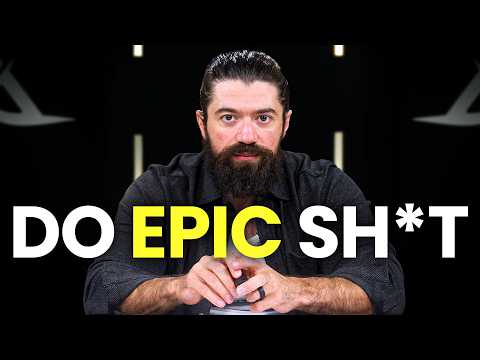
Because every 23-year-old wants to start a personal brand because they see it online, right? And what everyone forgets is the personal part. Not making videos or posting, but actually having real skills, accomplishments, or opinions or takes that are worth watching in the first place. But what makes an opinion worthwhile, right? You have unique insights or experience that the audience doesn't have, and that's why they value what you're saying. And so, if you want an epic personal brand, you have to do epic first. The proof is in the pudding. And it's not even in the pudding. The proof is the pudding. Right? You'll build a bigger brand making content for 6 months after a decade of experience than you will off a decade of content with only six months of experience. All right? Because no one cares about your opinion until they know it's worth something. And so you have to back up your talk with your walk.
Why it works
Takes a polarizing cultural controversy (Bud Light & Dylan Mulvaney) and breaks it down with cold, objective marketing logic, which drives massive comment-section debate.
Transcript
And so the example of this going wrong is uh Dylan Mulvaney makes an ad for Budweiser and it went super viral. The problem is it went viral for the wrong reason because the people who drink Bud Light and Budweiser don't like trans people. Now, to be clear, that's not all Budweiser drinkers or all Bud Light drinkers. Uh but the majority of them didn't want that association. And so, they netted a loss in revenue. And this is where this is gets interesting. I make no comment here. My point is that there is an audience, a smaller audience that loved that association. It was just smaller than the core audience. And so Dylan Mulvaney might be an amazing brand association for a different product or company who has an audience that like maybe for Starbucks that would be a better association because they have a more leftleaning audience. I think so I want to be clear there's no inherently good or bad association. It's just is it a good association for the ideal customer that you have your ICP your avatar.
Why it works
Demystifies branding into simple Pavlovian repetition using universally recognizable examples (his own flannel/tank top, Steve Jobs, Superman).
Transcript
Branding people make feel like it's this big amorphous thing, but it's just associating you with something else. So if you appear on a podcast with someone, you have a minor association. If that podcast person becomes your co-host, it's a stronger association because it happens more and more times. And so just think of them these pairings over and I have paired myself with a beard, a hat, uh the acquisition.com tank top, flannels. So much so that there are Halloween costumes of flannels and and tank tops, right? Because I've made the association so strong that people are like, "Oh, uh that guy's dressing up like Herozi, right?" But like fundamentally, like there's nothing really inherently unique about a flannel or a tank top. It's that I do it every single day. Now, if I say black tank, black turtleneck and jeans and New Balances, who do you think? Steve Jobs, right? If I say red S on your chest, I can just give you that and you know it's Superman, right? Because in every single appearance, he looks the same. And so, the association that's made is strong.
Why it works
Solves the #1 objection beginners have ('I haven't accomplished anything yet') by giving them an actionable alternative: document massive volume of work.
Transcript
people want the cliff notes but you have to still write the book to get the cliff notes and the cliffnotes are going to do more than the actual book will for many of you when you're making content right they don't want to go through five years of entrepreneurship. They want to learn the lessons in five minutes. Second stage is that once you have the cred, you associate yourself. And again, the credibility can do from come from volume of work or volume of accomplishments. All right? It can come from either. So if you're like, "Ah, but I haven't accomplished anything." It's yeah, show the work. Show the work. Do a thousand uh outreach attempts. Do 10,000 doors that you knock on and document it. That is the work. People will happily not want to do work. Watch you do work and then get the lessons from it. That's the idea.
Why it works
Explains the psychology behind why consumers rebelled against Coca-Cola's viral AI commercial while giving marketers a sharp lesson on brand associations.
Transcript
So Coca-Cola Classic made an ad around Christmas time that was like an AI Christmas ad. And so I can almost think about the meeting of like it's like listen we got to lean into AI it's the future all this stuff right and what ended up happening is that people backlashed against it because what is AI associated with with the everyone well many people are very afraid of AI right and Coca-Cola has a very like I would say vanilla Coca-Cola classic open happiness it's about as broad and general America and now global obviously but like they want to just get everyone to drink their drink right they're not trying to be polar on any side of the of the of the the train tracks, but AI is a very polarizing issue because so many people are afraid of it. And so by associating themselves, because people would tell that it was AI uh with AI, then they're associated with job cuts, job losses, big Fortune 500 companies cutting people out of creative departments, what about all the actors they used to pay, blah blah blah blah blah blah, right? And it creates this wrong narrative. And so it wasn't even that the ad was made with AI. It was that AI itself has a brand, which it does, and the pairing of Coca-Cola with it was not good. Now, could Nvidia have an AI ad? Absolutely. Could Microsoft have an AI ad? For sure. Right? All of these could have AI um ads and it would have been great. So, was an AI ad inherent inherently bad or good? It depends on the brand. It depends on the reinforcement history, the associations that that brand made over time.
Why it works
Connects the fall of Rome, UFC title defenses, and Red Bull's iconic Stratos space jump into a humorous, memorable lesson on staying relevant.
Transcript
Rome was defeated by the barbarians, not by an on a head-on a head-on match, but because they nibbled away at the borders, right? And so, brands once they're big, they get nibbled away into irrelevance, right? All these little players do things that are a little bit more relevant for smaller audiences and they start gaining market share. And so what does a big brand do to stay a big brand? You have to fight newer, hungrier challenges to defend the belt. Like somebody can't just win the UFC and then say, "I've won forever, right? They've got to stay in the title spot and let people take shots at them to usurp them, right?" And so a couple like one of my favorite examples is obviously like Red Bull when they did a jump from outer space, right? Like why would an energy drink do a jump from outer space because they have to take the most extreme example of craziness of like that guy must have been hopped up on so much stuff to do something that insane and if he if he was able to do that then you know what maybe if I'm a little bit tired they'll give me a little boost this afternoon. Right? And so you're defending the belt is doing an aspirational thing that your audience finds cool or interesting.
Why it works
Gives creators a crystal-clear mental model for why MrBeast-style high-effort content works: trading the creator's time to save the viewer's time.
Transcript
So, if I make content that's let's let's say I'm in the in the relationship romance niche, right? If I go on a hundred dates and then I make a video about those 100 dates and it's 12 minutes long, I get two seasons of The Bachelor in 12 minutes, that's a good deal. And so, if you think about what humans want out of content is they want speed. This is education to be clear. They want speed. They want to bargain for their time. The thing that we all feel like we don't have enough of is time. And so people will buy with their attention for things that paid down the time that they don't have to spend and can get all the benefits.
Why it works
Reveals the dual purpose of massive public launches used by Elon Musk and Steve Jobs: external brand hype and internal team alignment.
Transcript
And what I think is really interesting, I'd say for me as a business owner, shifting a little bit towards uh business, it underpins branding is that internally I can tell you when you have this big goal and it has to be public. That's the thing. It's like you have to kind of like set the date, make the shot across the bow, and you've got to let the world know that you're going to do this thing. And the amount of energy that it incites within the team and the alignment of where we're going is unbeatable. And this is why you hear the Steve Jobs and the Elon Musks talk about these insane timelines and they're so demanding because they know they've got this public thing that they can't cancel. There is a reason that sports has maintained relevance for such a long time. And why is that? Because they play a championship every year. Literally 7 days after the championship over like no one even pays attention to it. They're literally all the commenters are talking about what's next season going to look like, who's who's on the waiver wire, who's getting traded, what coaches are moving around. people move on, but they need to have this thing. And you know what? You're only as good as your last season, right? If you were Super Bowl champ and the next season, you go one in one in, you know, 15 or one and 16 or whatever it is, um, you're no longer relevant. So, you have to keep defending the belt, right? You have, if you want to create a brand, you're trying to create a dynasty.
Why it works
Explains why most company/creator goals are boring to audiences: there is no risk of public humiliation or real skin in the game.
Transcript
You got to find these big moments, these big external goals that you can drive towards things that scare you, things where you actually have real stakes. That's the thing that people make like you have to have stakes. You have to have skin in the game. Otherwise, it's not interesting. What is the first thing that happens in every reality show? They show the big amount of money, right? Who wants to be a millionaire? There's a million dollars. There's inherent stakes. And so you have to create stakes both within the company because if we don't do this, we're going to be humiliated. We're going to miss our goals. Uh we could we could lose a lot of money and that puts everyone's jobs at risk. Like there's real stakes inside the company, but because of that people out on the outside, it makes you and the goal more interesting.
Why it works
Uses a universally relatable movie-trailer analogy to explain the difference between marketing hype, word of mouth, and product-led brand equity.
Transcript
what we say is the first level of branding about ourselves. And then people consume our product and it's what other people say. And then finally, you have a customer who heard what other people said and they buy it and then it's about what they say. And if you buy a product, it doesn't matter how good the marketing was, you're going to make a decision about it. My favorite example of this is like if you go to a movie, you're going to see a trailer. You might think, "Oh, that trailer was interesting." And then a friend of yours sees the movie and you say, "Oh, how was it?" And the person might say, "Oh, the movie was great." And then you say, "Fine, I'll go see it." And then when you see the movie, you will make the decision and you will not care about the trailer and you will not care about what your friend said. Uh you will just care what you think. And so ultimately, if that movie was good, you're more likely to see a movie with that actor or about that topic or from that director or from that production studio as a result of that because they fulfilled their promise, right? And so the idea is that once you do that process, the virtuous cycle of branding is you continue to do that and then basically wait 5 years and don't give up.
